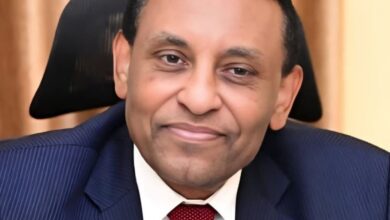
Dr. Paolo Branca, Professor of Arabic Language and Islamic Studies at the Catholic University of Milan:Egyptians are the largest community in Milan, owning around 12,000 businesses and commercial registrations

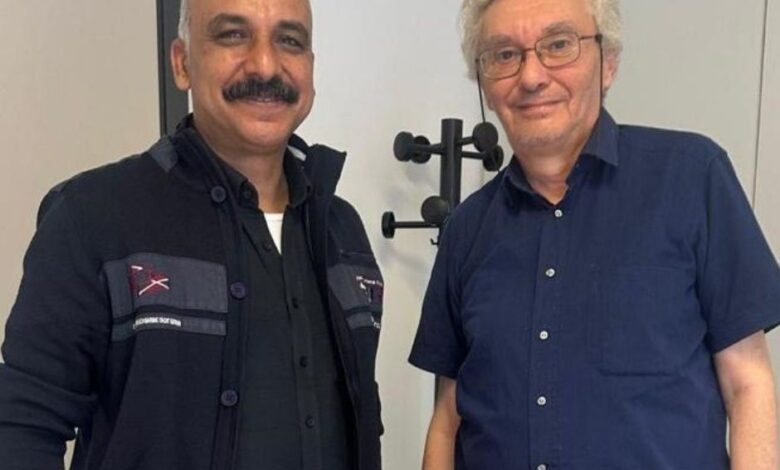
>> I learned Arabic initially for business purposes, but later shifted to literature and history
>> President Sadat was an intelligent leader who moved from war to peace—and paid the price for it
>> Europeans do not know enough history and often hold a superficial image of Islam and Muslims
>> Sufism has declined in the face of radicalism… as ideologies collapsed, religion and skin color became key reference points
Interview conducted in Milan by: Khair Ragab
Dr. Paolo Branca, Chair Professor of Arabic Language and Islamic Studies at the Catholic University of Milan, is among the few European scholars who have mastered Arabic, including Egyptian dialects. Since 1975, he chose to study the languages of the Middle East, initially aiming to work with Italian companies such as ENI that were expanding into Egypt and the Gulf. However, his academic journey in the Department of Religious and Historical Studies—often regarded as Italy’s equivalent to the Sorbonne—shifted his focus from economics to Arabic literature and history. Over time, he became a leading academic reference across European and American universities, particularly in evaluating research submitted by Arab scholars.
In his interview with Afro News, Branca explained that his passion for Egyptian-Arab literature, history, and culture stems from its deep and rich heritage, spanning from ancient times to modern intellectuals. He added that Egypt and Italy share a cultural legacy capable of influencing the world. He also warned that the Israeli war on Gaza would likely produce a new generation of radicalized youth due to the ظلم faced by the Palestinian people.
>> What sparked your interest in studying Arabic?
– My initial motivation was to work in the oil sector. Arabic was taught at the Faculty of Arts and Oriental Languages at the University of Venice—one of the few institutions, along with Naples, where subjects like art history, philosophy, geography, and Arabic were taught together. Arabic was considered a rare and valuable language in the economic field, especially with the oil boom in Egypt and the Arab region during the 1970s. However, I ultimately did not pursue a career in business and instead moved into academia, focusing on literary and intellectual research on the Arab and Islamic world.
>> When was your first visit to Egypt?
– On October 6, 1981—the very day President Sadat was assassinated.
>> How do you view President Sadat?
– He was a highly significant leader for Egypt and the Middle East. He was intelligent and bold enough to transition from war to peace, becoming a pioneer of that path.
>> But he paid the price for that choice, didn’t he?
– Absolutely. Anyone who introduces new ideas in politics or history inevitably pays a price.
>> What is your assessment of the Egyptian community in Italy, particularly in Milan?
– Milan can be considered the capital of Egyptians in Italy. There are tens of thousands of Egyptians—both Muslims and Copts—working across various sectors such as restaurants, cleaning services, and construction. Official figures indicate that Egyptians own around 12,000 businesses in Milan alone. The city also hosts mosques, 12 churches, and two monasteries for Egyptian Orthodox Christians.
>> Is Islamophobia still prevalent in Milan and Italy?
– The core issue is a lack of historical awareness. Many people view Muslims through a lens of fear shaped by extremist actions, which leads to a superficial understanding of Islam. In everyday life—schools, workplaces—there are generally no major issues. Interaction between Egyptians and Italians, Muslims and Christians alike, is largely normal and constructive.
>> Do Egyptians face integration challenges?
– Migrants in general—not just Egyptians—face bureaucratic obstacles across Europe. There is also political anxiety among voters about immigration, particularly from the Middle East and North Africa.
However, social engagement in schools and shared spaces is crucial for integration. In Milan, for example, hundreds of Catholic churches host evening social and sports activities where students from different nationalities and beliefs interact peacefully. Unfortunately, the media rarely highlights these positive realities.
>> What role can Italian educational institutions in Egypt play in bridging cultures?
– Egypt has many Catholic schools that teach in Arabic, Italian, and French, yet there is no structured pathway for graduates to work or study in Italy. Leveraging this group—along with tourism workers in Sharm El-Sheikh and the Red Sea who speak Italian—could benefit both countries and help reduce irregular migration.
>> Why are there no initiatives in this direction?
– I proposed this idea to the Italian government, but it has yet to materialize, possibly due to international concerns or institutional hesitation.
>> Can the Holy Family Route project enhance cultural ties?
– Certainly. It targets a global market of over 1.5 billion Catholics. Tourism is a key pillar of Egypt’s economy, and beyond the pyramids, Egypt holds immense religious and human heritage. The project enjoys broad acceptance among both Muslims and Christians and could serve as a platform for deeper cooperation.
>> Who should lead such initiatives?
A: It should be a collective effort involving governments, religious institutions, and cultural and educational sectors. Media also has a crucial role in reshaping perceptions of the Middle East.
>> What is your view on Italy’s “Mattei Plan”?
– ENI historically played a major role, including supporting projects like the Aswan High Dam. However, the focus remains largely on energy and economics, while culture is sidelined. This is both a mistake and a risk, as it leaves room for narratives like the “clash of civilizations” to grow.
>> How can the cultural dimension be strengthened?
– Through media, education, and youth exchange. There are thousands of Egyptian students who speak Italian but have little interaction with their Italian peers—despite the potential for meaningful exchange.
>> You oppose the “clash of civilizations” theory. How do you see today’s world?
– Current conflicts stem from the collapse of major ideologies like communism and liberalism. In their absence, religion and race have become dominant reference points, which is dangerous and regressive. However, diversity can be an opportunity if managed positively.
>> How can we reach that positive space?
– It starts small—a newspaper article, a radio program, a TV discussion. Gradually, these efforts can reshape perceptions.
>> Has Sufism prevailed, or has radicalism?
– Unfortunately, Sufism receives little attention, despite representing the deep spiritual core shared across religions. Sufi traditions remain strong but underappreciated. They offer a foundation for dialogue rooted in universal values like love, mercy, and peace.
Cultural connections even appear in small details—for example, the folk character “Juha” in Arab culture is known as “Giufà” in Sicily. Islam itself is part of Europe’s historical roots, alongside Greek and Roman heritage.
>> When was your last visit to Egypt, and how did you find it?
– During my last visit, I found it cleaner than Milan. I am currently preparing for another visit soon.
read more