Ambassador Dr. Mohamed Hegazy Writes: Julius Nyerere Dam .. A New Model of Egyptian Soft Power in Africa

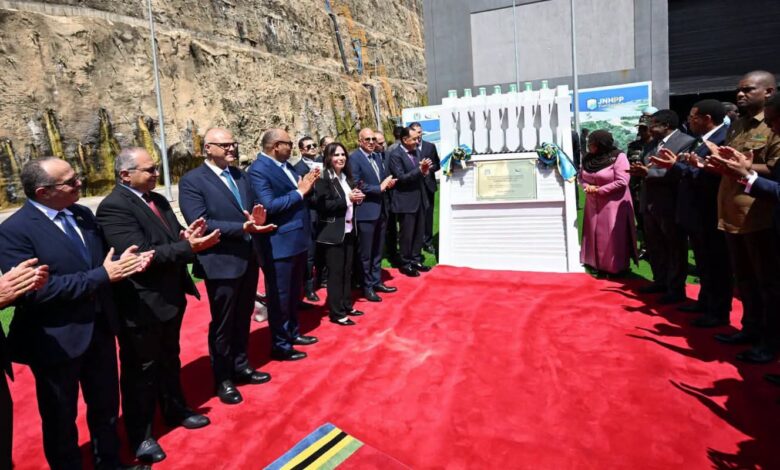
The visit of Prime Minister Dr. Mostafa Madbouly to Tanzania to participate, on behalf of President Abdel Fattah El-Sisi, in the inauguration of the Julius Nyerere Hydroelectric Dam and Power Plant represents an important milestone in Egyptian-African relations, It is significant not merely as an occasion to inaugurate one of Tanzania’s largest infrastructure and energy projects, but also because of its political, economic, and strategic implications, which extend well beyond the project itself, It reflects an important evolution in the nature of Egypt’s presence in Africa—from political and diplomatic engagement toward development and investment partnerships, the transfer of expertise, and capacity building.
The project, implemented by an Egyptian consortium comprising Arab Contractors and Elsewedy Electric, demonstrates that Egyptian cooperation with African countries is no longer confined to aid or small-scale projects. It now extends to major national and strategic projects based on Egyptian engineering expertise and capabilities. The project is valued at approximately $2.9 billion and has a generation capacity of 2,115 megawatts, with estimated annual electricity production of around 6,307 gigawatt-hours. This makes it Tanzania’s largest hydroelectric power generation project, It is intended to strengthen the national electricity grid and provide a sustainable source of energy to support the country’s economic and social development.
One of the project’s most important achievements is that it has not relied solely on Egyptian engineering expertise in carrying out the construction work. Egyptian companies have also provided opportunities for extensive participation by Tanzanian workers, engineers, and technicians, some of whom are now working in the dam’s operation and management facilities. This contributes to the localization of knowledge and capacity building and transforms the project from merely a construction undertaking into a practical school for the transfer of expertise and technology. The implementing companies have indicated that thousands of Tanzanians were provided with employment opportunities during the construction phases, reinforcing the project’s developmental value and demonstrating that Egyptian-African partnerships can be based on building local capabilities rather than simply exporting engineering services.
The engineering dimensions of the project are particularly significant. It includes a main dam on the Rufiji River, approximately 1,025 meters long and more than 130 meters high, in addition to auxiliary dams and a huge reservoir with a capacity of around 34 billion cubic meters. This enables the regulation of the Rufiji River’s flows, helps reduce flood risks, and provides greater regularity in water availability for agriculture and other uses, alongside electricity generation.
The importance of the project extends well beyond electricity production. Its impact reaches agriculture, water management, flood control, and environmental protection. It is expected to address an important part of Tanzania’s growing energy needs and provide clean electricity to millions of people, supporting industrialization, investment, and public services while enhancing the Tanzanian economy’s capacity to achieve higher rates of growth. The project therefore constitutes an important component of Tanzania’s national development infrastructure, rather than merely being a power-generating facility.
The participation of the Egyptian Prime Minister in the inauguration carries particular political significance. It reflects the Egyptian state’s appreciation of the project as a model of development cooperation between Egypt and Tanzania and sends a clear message that Egypt views Africa as a space for partnership, development, and shared interests—not merely as a sphere of diplomatic engagement. The Prime Minister’s presence also conveys Egypt’s appreciation for its relations with Tanzania and confirms that major development projects can become new bridges connecting countries and peoples.
More importantly, the Julius Nyerere Dam offers a practical response to certain narratives that have sought to portray Egypt’s position on development projects in the Nile Basin as opposition to development. Egypt supports the right of Nile Basin countries to develop and benefit from their resources, while at the same time upholding its water rights and national interests, as well as the rights and interests of downstream states. This position clearly distinguishes between supporting development on the one hand and the necessity of respecting the principles of cooperation and avoiding harm to the vital interests of other countries on the other.
From this perspective, the Julius Nyerere Dam carries an important message regarding Egypt’s approach to the Nile water issue. It demonstrates through action, rather than words alone, that Cairo is not opposed to water projects in the Nile Basin. Rather, Egypt seeks to ensure that such projects form part of a regional cooperation framework that promotes development while safeguarding the interests of all Nile Basin countries. This strengthens the concept of the river as a platform for cooperation and shared development rather than an arena for conflict or zero-sum competition.
The project also acquires additional significance because of its location in an area historically known as the Selous Game Reserve, a region of exceptional ecological and biological value. The construction of the project raised significant environmental challenges because of its location within a site listed as a UNESCO World Heritage property. This required the project to address the protection of wildlife and natural habitats, as well as the management of its environmental and social impacts. UNESCO and the World Heritage Committee expressed concerns regarding the project’s potential long-term effects on the site’s outstanding universal value. This demonstrates that the challenge was not merely engineering and financial in nature, but also involved highly complex environmental and social considerations.
Here, the Egyptian experience in implementing a project of this magnitude in a sensitive natural environment assumes particular importance. The project teams had to balance the requirements of constructing one of Tanzania’s largest energy facilities with considerations relating to environmental and wildlife protection, in addition to the technical challenges associated with diverting the Rufiji River, constructing auxiliary dams and the reservoir, building the power station, and establishing the necessary electricity transmission connections. These challenges illustrate the scale and complexity of the project. Egyptian officials have described the project as having faced multiple engineering and environmental challenges throughout its implementation.
From a financial perspective, the project represented a major challenge because of its enormous cost, estimated at approximately $2.9 billion. The Tanzanian government undertook full financing of the project, reflecting the scale of Tanzania’s commitment to it as a strategic, long-term national undertaking. Official Tanzanian data indicate that the project’s value reached approximately 6.56 trillion Tanzanian shillings, while payments to the contractor reached substantial levels as implementation progressed. This illustrates the scale of the financial commitment undertaken by the Tanzanian state to bring the project to completion.
The implementation process was far from easy. The project was initially scheduled for completion in June 2022, but completion dates were subsequently postponed as a result of challenges and modifications associated with the project’s scale and technical and implementation complexities. The timetable was extended again, reflecting the nature of mega-projects in which geological, hydrological, environmental, financial, and logistical considerations intersect. Completing the project therefore represents, in itself, a testament to the ability of the Egyptian consortium to undertake a project of such magnitude in such a complex environment.
The success of Egyptian companies in implementing a project of this scale also represents an important addition to Egypt’s soft power in Africa. Soft power is built not only through culture, education, and diplomacy, but also through the ability to provide expertise and technology and to implement projects that have a direct impact on people’s lives. When an African country sees a strategic project on its territory implemented by Egyptian companies, while its own national personnel participate in its construction and operation, this creates a reservoir of trust that extends beyond official relations to a direct relationship between Egypt and African societies.
Economically, the project opens the door to a broader phase of exporting Egyptian expertise to Africa, whether in energy and infrastructure, transport, water management, new cities, digital transformation, or engineering services. The successful completion of the Julius Nyerere Dam also provides Egyptian companies with an opportunity to expand their presence in African markets, capitalize on their accumulated experience in implementing major infrastructure projects, and transform that experience into a platform for new projects across the continent.
The choice of the name Julius Nyerere also carries an additional symbolic dimension. Nyerere was one of Africa’s most prominent symbols of liberation and African unity. The project therefore evokes the shared historical memory between Egypt and Tanzania and reaffirms the deep political and historical roots of relations between the two countries, which were associated with support for African liberation movements and Egypt’s role in supporting the independence of the continent. The project thus carries a name that reflects a shared history while simultaneously embodying a new future for bilateral relations based on development and economic partnership.
Accordingly, Prime Minister Mostafa Madbouly’s visit to Tanzania should not be viewed merely as participation in an inauguration ceremony. It should be understood as part of a comprehensive political and strategic message: Egypt supports African development, possesses the capacity to participate in implementing major projects, and seeks to build sustainable economic partnerships with African countries, while at the same time maintaining its water rights and national interests and promoting a model that combines diplomacy, development, investment, and knowledge transfer.
The Julius Nyerere Dam can become a replicable Egyptian-African model that brings together diplomacy, development, investment, engineering expertise, and capacity building. It embodies a more advanced concept of Egyptian soft power, based on the premise that the most effective way to strengthen Egypt’s presence in Africa is to become a partner in building the continent’s future and to transform historic political relations into shared projects and common interests that benefit peoples on both sides.
In this context, the inauguration of the Julius Nyerere Dam represents more than an engineering achievement. It is a testimony to Egypt’s capacity to work with Africa and for Africa, and a message that development can be one of the most important bridges of Egyptian foreign policy on the continent. It also demonstrates what Egyptian companies can achieve when national expertise is combined with political will and historic relations. Above all, it confirms that the Nile, water resources, and energy can be transformed from areas of competition into fields of cooperation and the creation of shared interests—when there is political will and respect for the rights of all Nile Basin countries.
read more