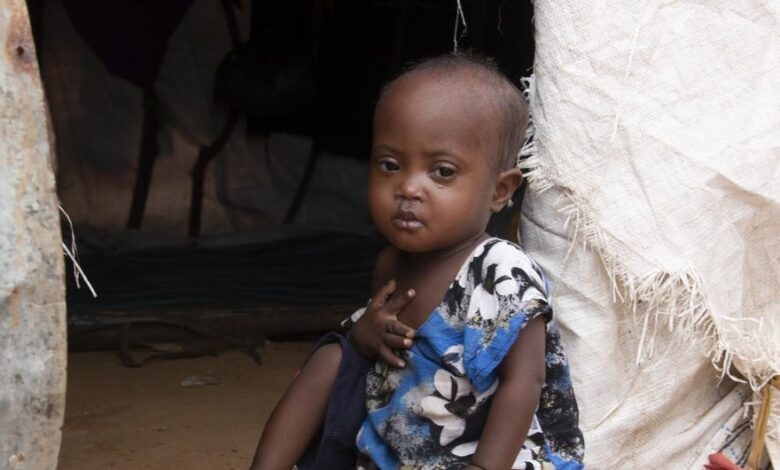
A United Nations agency warned of a worsening humanitarian crisis in Somalia, with nearly 6.5 million people facing high levels of hunger and more than 1.8 million children at risk of acute malnutrition due to severe drought.
George Conway, deputy special representative for Somalia with the United Nations Assistance Mission in Somalia, said the drought emergency in Somalia has worsened alarmingly, driving soaring water prices, dwindling food supplies, livestock deaths, and critical shortfalls in humanitarian funding.
“Urgent life-saving assistance is essential to save lives and prevent a collapse of pastoral and farming livelihoods, as the coming months are critical with no rains expected at least until the next Gu rains in April-June,” Conway said in a joint statement issued in Mogadishu, the capital of Somalia.
The warning follows the release of the Integrated Food Security Phase Classification report on Tuesday, which projects that a third of the population — 6.5 million people — will face crisis levels of hunger or worse by March, an increase of 1.7 million since January.The report also estimates that two million people are experiencing severe hunger, while over 1.8 million children under five will face acute malnutrition in 2026, nearly half a million of them likely to be severely malnourished.
The drought has devastated agriculture, causing widespread crop and livestock losses and triggering large-scale displacement. Both Somalia and the UN cautioned that severe funding cuts have forced humanitarian partners to scale back or suspend essential programs, including food security, health, nutrition, and water and sanitation interventions.
Mohamud Moallim Abdulle, commissioner of the Somalia Disaster Management Agency, said the severity of this drought is undeniable and deeply alarming.”We urgently call on international partners, the Somali diaspora, businesses, and civil society to scale up immediate support,” he added.Some 6.5 million people, or about a third of Somalia’s population, will face crisis levels of hunger through March, an increase of 1.7 million since January, UN officials warned Wednesday.
Speaking to reporters at the UN headquarters via video link, World Food Programme (WFP) Director of Emergency Preparedness and Response Ross Smith said the latest Integrated Food Security Phase Classification (IPC) report for Somalia, released on Tuesday, confirmed fears that the humanitarian situation in Somalia has significantly worsened.
“Of these, two million of the most vulnerable women and children are expected to face severe hunger,” with over 1.8 million children under the age of 5 to face acute malnutrition in 2026, he said, adding that Somalia is in the midst of a very complex hunger crisis, where two rainy seasons have failed, conflict and insecurity persist, and thousands of people have been forced to flee their homes in search of shelter, food and basic services.
Meanwhile, agencies in Somalia, including WFP, are facing a severe lack of resources, he warned, adding that without urgent funding, WFP’s life-saving emergency food and nutrition assistance in the country will be forced to cut support to the most vulnerable and eventually come to an end soon.
Rein Paulsen, director of the Office of Emergencies and Resilience with the Food and Agriculture Organization (FAO), highlighted the drought that is having a devastating effect on Somalia’s agriculture. “Concretely, this means widespread crop and livestock losses in addition to large-scale displacements of people.”
As a result of the drought, the country’s last main cereal harvest was 83 percent lower than the long-term average between 1995 and 2025, and livestock births have also dropped, said Paulsen, stressing the urgency of life-saving assistance to protect lives and actions to prevent a collapse of rural farming pastoral livelihoods.To respond to the situation, FAO needs 85 million U.S. dollars to support a million of the most vulnerable, high-risk, underserved rural people at the moment, but it has just 6 million dollars to date, he said.
Food aid in Somalia could halt within weeks due to funding shortages, WFP warns