Ambassador Dr. Mohamed Hegazy Writes: King Mohammed V — Morocco’s Independence and Cairo at the Heart of the National Struggle

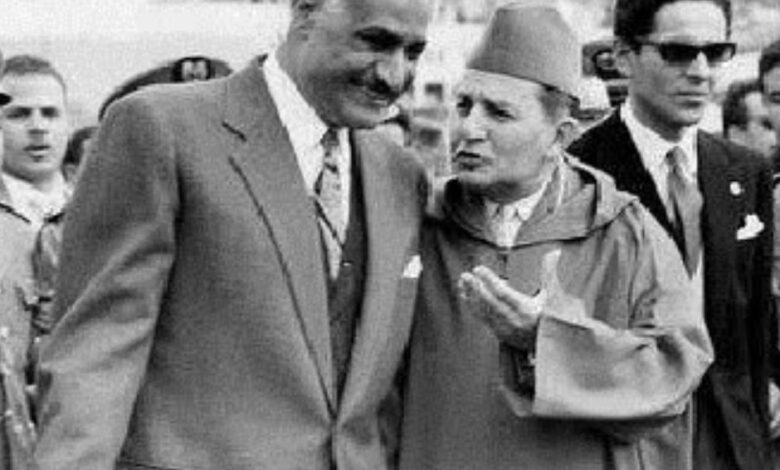
In the history of African liberation movements, Morocco holds a prominent position as one of the countries that waged a long struggle to regain its independence and put an end to the colonial protectorate system , At the heart of this struggle stood King Mohammed V, who became a symbol of the Moroccan national movement, a leader of the struggle for independence, and a figure closely associated with what Moroccan history has come to call the “Revolution of the King and the People.”
Yet the story of Morocco’s independence was not confined to Moroccan territory. The struggle extended beyond the country’s borders, and Cairo became one of the most important capitals to embrace the Moroccan national cause and provide it with an Arab and African political and media platform.
Mohammed V — The King Who Became a Symbol of Independence
Sultan Mohammed bin Youssef, who would later become King Mohammed V, was born in 1909 and ascended to the Moroccan throne in 1927.
At the time, Morocco was subject to the protectorate system imposed by France in 1912, while northern Morocco was under Spanish protection, alongside other territories.
As the Moroccan national movement gained momentum, the confrontation between the palace and the national movement on one side and the colonial authorities on the other increasingly intensified.
Mohammed V understood that preserving Morocco’s sovereignty and territorial unity represented the essence of his historic responsibility.
Following the end of the Second World War, demands for independence expanded, and Mohammed V became increasingly explicit in expressing the aspirations of the Moroccan people.
The Tangier Speech and the Beginning of a New Phase
The Tangier speech of April 1947 was an important milestone in the history of the Moroccan national movement.
In his speech, Mohammed V reaffirmed Morocco’s commitment to its unity and identity and expressed the country’s aspiration for liberation and the restoration of its sovereignty.
The speech sent a clear message to France and to the world that the Moroccan question could no longer remain confined within the framework of the colonial protectorate.
From that point onward, relations between the palace and the protectorate authorities moved toward an increasingly direct confrontation.
Cairo — Morocco’s Voice in the Arab World
During this period, Cairo was gradually emerging as a major center for Arab and African liberation movements.
Following the establishment of the League of Arab States in 1945, the Egyptian capital became an important platform for Arab causes, including the Moroccan question.
Moroccan nationalists found in Cairo broad opportunities for political, media, and diplomatic activity.
The Moroccan cause also gained visibility in the Egyptian press, within the circles of the Arab League, and through Arab political contacts.
Cairo’s importance lay not merely in being an Arab capital sympathetic to Morocco. It was also a center where the liberation struggles of North Africa converged.
In Cairo, the Moroccan cause intersected with the Algerian and Tunisian struggles, transforming resistance to French colonialism into a broader Maghreb, Arab, and African cause.
Mohammed V and the National Movement
Mohammed V was not merely the head of state during the period leading to independence.
He gradually became a symbol of the national struggle.
The Moroccan national movement regarded the palace as a fundamental partner in confronting the protectorate, while the Moroccan people came to see the King’s position as an expression of their commitment to sovereignty and national unity.
Mohammed V’s popularity grew over time, particularly as it became increasingly clear that France sought to weaken his authority and separate him from the national movement.
Exile — The Turning Point
In August 1953, the French protectorate authorities took their most consequential step.
Mohammed V was forced to leave Morocco. He was first exiled to Corsica and subsequently to Madagascar, while Mohammed Ben Arafa was installed in his place.
The result, however, was the exact opposite of what France had intended.
Rather than weakening the national movement, Mohammed V’s exile united broad segments of the Moroccan people around the King.
His return became a national demand, and the period came to be remembered in Moroccan history as the “Revolution of the King and the People.”
Cairo Follows Morocco’s Struggle
Outside Morocco, the national movement continued its efforts to internationalize the Moroccan question.
Cairo was among the leading capitals that closely followed developments in Morocco and supported the Moroccan people’s right to independence.
The League of Arab States also played a role in supporting the Moroccan cause in international forums.
Radio Cairo and the Egyptian press became important instruments for bringing the Moroccan struggle to the attention of the Arab world, at a time when media outlets under colonial control sought to portray events from a different perspective.
Here, the true significance of Cairo’s role becomes evident.
Cairo did not carry arms in the mountains of Morocco, but it carried the voice of the Moroccan cause to the Arab world. It also helped provide the political and media space that the national movement needed.
The King’s Return
As national resistance intensified and international political pressure increased, France came to recognize that its policy of excluding Mohammed V had failed.
In November 1955, Mohammed V returned to Morocco amid an enormous popular reception.
His return represented the final turning point in the struggle for independence.
In March 1956, France recognized Morocco’s independence and ended the protectorate system.
Morocco thus entered a new era, with Mohammed V becoming the first King of independent Morocco.
Independence and National Unity
For Mohammed V, independence was not simply the termination of the French protectorate.
It was a project aimed at restoring the sovereignty and unity of the Moroccan state.
The final years of his reign were associated with efforts to build the institutions of the independent state, consolidate the country, and restore the elements of national sovereignty.
For this reason, Mohammed V has remained in Moroccan memory as the King of Independence.
Cairo in the Story of Morocco’s Independence
When we revisit this period through the lens of the series “Cairo: Capital of African Struggle,” the importance of Cairo becomes particularly clear.
The Egyptian capital was one of the most important platforms through which the Moroccan cause moved beyond the local sphere into the wider Arab and international arena.
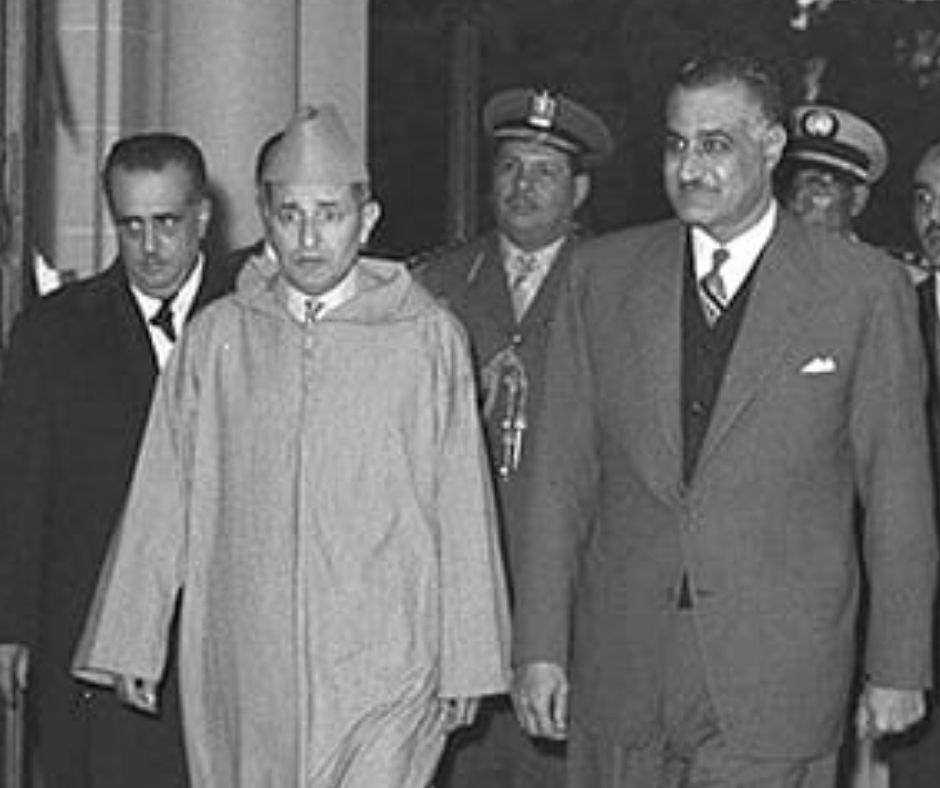
In Cairo, Moroccan nationalists met with Arab and African liberation leaders and movements, engaged with the League of Arab States, and benefited from Egyptian media in defending Morocco’s right to independence.
This role was consistent with Egypt’s broader vision during the era of President Gamal Abdel Nasser, which regarded resistance to colonialism in North Africa as part of the wider Arab and African liberation struggle.
Mohammed V — A Symbol of the Independence Era
The figure of Mohammed V remains closely associated with one clearly defined period in Moroccan history:
the struggle for independence.
He was the King who refused to remain merely a symbolic ruler under the protectorate. His name became inseparable from the national movement; he endured exile and eventually returned to his country with the cause of independence victorious.
Therefore, placing Mohammed V within the series “Cairo: Capital of African Struggle” is justified not simply because he was the King of Morocco at independence, but because he represents a generation of leaders whose national struggles were connected to a broad network of Arab and African solidarity.
Conclusion
Morocco’s independence was the result of a long struggle involving the Moroccan people, the national movement, and King Mohammed V.
Cairo was one of the arenas of that struggle beyond Moroccan territory. It embraced the Moroccan cause, opened its platforms to Moroccan nationalists, supported Morocco’s presence in the Arab sphere, and connected the Moroccan struggle with the broader liberation movement in North Africa.
From Rabat to Cairo stretched a long road toward independence. At the end of that road, Mohammed V returned to Morocco—not merely as a King returning from exile, but as a symbol of the victory of a people’s will over the system of colonial protection and foreign domination.
read more