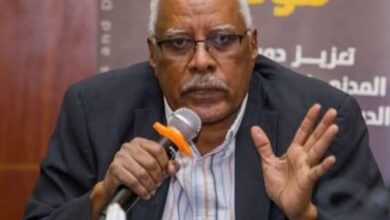
Ambassador Dr. Mohamed Hegazy Writes: The African Barter Fund… An Innovative Mechanism to Free Intra-African Trade from the Foreign Currency Crisis


Despite the passage of several years since the launch of the African Continental Free Trade Area (AfCFTA), intra-African trade remains among the lowest rates globally, accounting for only a limited share of the continent’s total trade with the world, This is not due to weak production or a lack of opportunities, but rather to a range of challenges, foremost among them shortages of foreign currency, high financing costs, and difficulties in settling payments between African countries.
In many cases, one African country possesses products needed by its neighbors, while another country has goods or services that the first country could import, Yet the transaction is held up because dollars or euros are unavailable, even though the goods themselves are available ,This highlights the need to think beyond traditional frameworks and develop financial and trade instruments suited to the realities of African economies.
Against this backdrop, the Alamein Africa Economic Forum could launch an “African Barter Fund” as one of the pioneering initiatives for strengthening intra-African trade and providing a practical mechanism for exchanging goods and services without full reliance on foreign currencies, through a clearing and settlement system based on the principle of reciprocal benefits and equivalent value.
The idea would be to establish a financial and commercial institution responsible for registering transactions, assessing their value according to international prices, and managing clearing operations between countries and companies. For example, Egypt could export pharmaceuticals, construction materials, or agricultural equipment to an African country in exchange for copper, cocoa, coffee, cotton, gold, livestock, timber, or other products in which that country has a comparative advantage, without requiring large cash flows in hard currencies.
The benefits would not be limited to governments. The system could also encompass the private sector, allowing African companies to conclude trade-exchange agreements under an institutional framework that provides legal and financial guarantees, reduces the risks of non-payment, and lowers financing and insurance costs.
The Fund could operate in coordination with the African Continental Free Trade Area, the African Export-Import Bank (Afreximbank), and African central banks. It could also rely on an advanced digital platform to register contracts, monitor their implementation, and conduct settlements transparently, thereby ensuring efficiency and building confidence among all parties.
Part of its activities could also be dedicated to building strategic reserves of African commodities, such as grains, oils, fertilizers, meat, and minerals. This would help stabilize markets, address global volatility, and strengthen the continent’s food security.
One of the important advantages of such an initiative is that it would encourage industrialization within Africa rather than perpetuating the export of raw materials and the import of manufactured products. When barter is based on added value, countries will have greater incentives to develop their domestic industries in order to achieve better returns from trade.
For Egypt, the African Barter Fund would represent an opportunity to maximize the benefits of its industrial capabilities and increase exports of pharmaceuticals, medical equipment, fertilizers, construction materials, engineering products, and food industries, in exchange for the raw materials and natural resources required by Egyptian industry. This would strengthen economic security and reduce the import bill from distant markets.
The objective of this initiative would not be to eliminate transactions in foreign currencies, but rather to provide an additional instrument that gives African economies greater flexibility in managing their trade, reduces their exposure to global financial crises and exchange-rate fluctuations, and supports the continent’s move toward genuine economic integration.
The time has come for Africa to develop its own financial and trade instruments, rooted in its specific needs, and to devise solutions suited to its economic realities rather than simply replicating models that do not address its actual challenges.
If the Alamein Forum seeks to become the “Davos of Africa,” launching the African Barter Fund at its inaugural edition would send a clear message: the continent is no longer content merely to diagnose its problems; it is beginning to offer practical and innovative solutions that enhance trade, open new horizons for investment, and support the objectives of Agenda 2063.
In the next article in the “Towards Alamein” series, we will examine the “Aswan African Livestock and Meat Exchange”… and how Egypt could become the regional hub for the trade, processing, and export of Africa’s livestock resources.
read more