Saxony Egypt University Organizes Logistics Conference to Strengthen Integration Between Education and the Labor Market

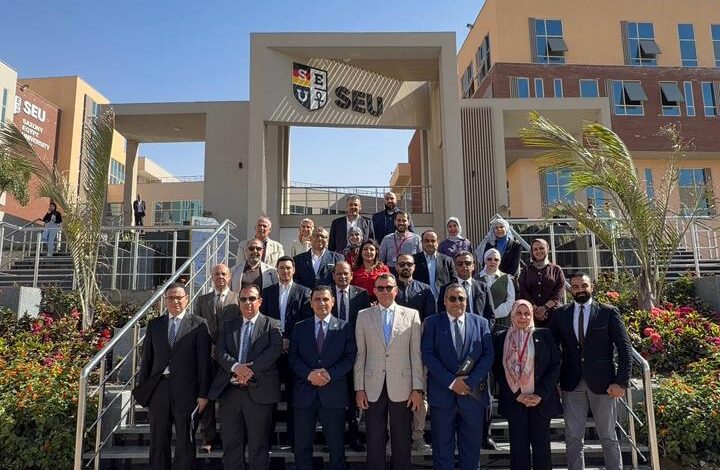
Saxony Egypt University for Applied Sciences and Technology organized its first conference on logistics and supply chain management with the participation of the Advisory Council, as part of the university’s strategy to strengthen integration between applied education and labor market demands while supporting the development of professional competencies and practical skills required in modern logistics sectors.
The conference witnessed the first meeting of the Advisory Council of the Logistics and Supply Chain Department at the Faculty of Management Technology, with the participation of a distinguished group of experts, academics, and representatives from industrial and service sectors. The council aims to support the development of academic curricula, identify the skills required for graduates, and enhance practical training opportunities in line with the latest trends in logistics and supply chain management.
The event represents a new step toward enhancing the quality of technological education and linking academic learning with real professional practice, thereby contributing to the preparation of graduates capable of competing in local, regional, and international labor markets.
Attendance of Academic Leaders and Logistics Industry Experts
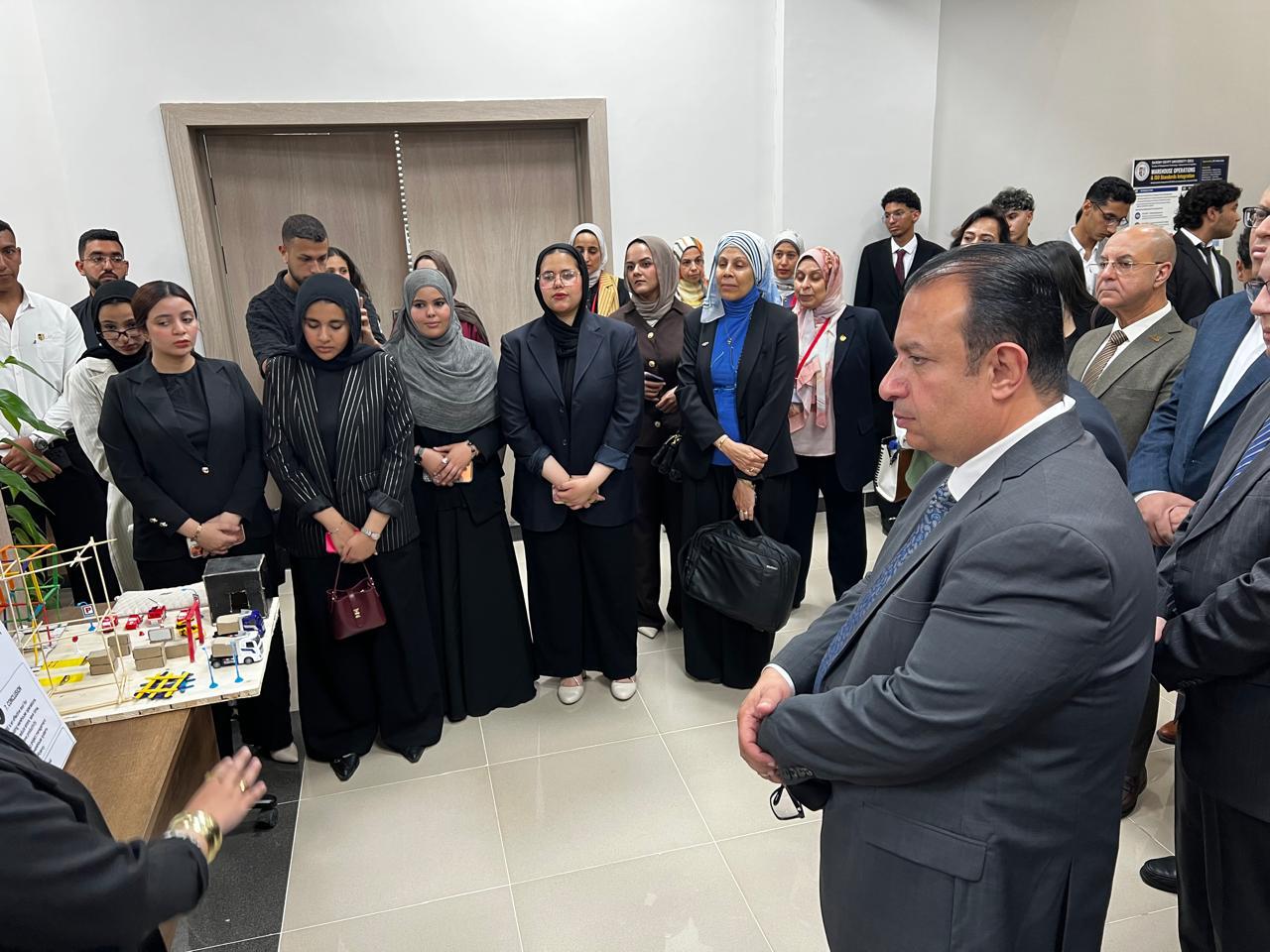 The meeting was attended by Professor Dr. Mohamed Abdel Rahman, President of the University; Dr. Khaled Maabadi, Director General of Investment at the General Authority for Land Ports; Dr. Amr Abdelaziz, Chairman of Kader Factory; Dr. Enas Ahmed Deh, Dean of the Faculty of Logistics Technology; and Dr. Rabab Sobhy, Head of the Logistics and Supply Chain Department.
The meeting also included maritime expert Captain Ali Assem, Hussein El Akkad, Strategic Planning Director at El Akkad Group of Companies, Dr. Aya El Garhy, Technical and Operations Director at SIS Company, Dr. Mohamed Shalaby, Commercial Director of Egytrans, as well as Dr. Hisham Talba, Logistics Manager at Blades Egypt Company, alongside faculty members and specialists from the Faculty of Management Technology – Logistics and Supply Chain Department.
During the meeting, a presentation was delivered highlighting the importance of establishing an Advisory Council for the Faculty of Management Technology – Logistics Technology Program, in light of modern trends in technological education that emphasize the necessity of directly linking academic programs with labor market requirements.
Participants stressed that benefiting from the expertise of industry representatives and professional sectors constitutes a fundamental pillar in developing the educational process, ensuring the continuous modernization of scientific and practical content in accordance with the rapidly changing business environment, while supporting the quality of educational outcomes and improving graduates’ ability to integrate quickly into the labor market.
Attendees also noted that logistics and supply chain management is among the most application-oriented disciplines directly connected to industrial, commercial, and service developments, which requires a structured framework to benefit from the insights of experts, specialists, employers, and relevant sectors.
Objectives of the Logistics Advisory Council
The meeting clarified that the Advisory Council serves as a supporting mechanism for developing the academic program through:
- Linking the educational process with labor market needs and relevant professional sectors.
- Supporting the modernization of curricula and academic courses in line with the latest global trends in logistics and supply chain management.
- Contributing to the identification of the skills, knowledge, and competencies required for graduates.
- Enhancing practical and applied training opportunities and cooperation with industrial and service institutions.
- Providing specialized professional insights that support the quality of academic and practical performance within the department.
Scope of the Advisory Council’s Work
The Advisory Council is responsible, in an advisory capacity, for providing opinions and consultations regarding issues related to the development of the Logistics and Supply Chain Program, including:
- Reviewing the compatibility of study plans and academic courses with labor market requirements.
- Providing recommendations regarding proposed updates to the program’s scientific and practical content.
- Suggesting modern topics and emerging fields that should be incorporated into the educational process.
- Supporting the organization of practical training, field visits, and applied activities.
- Strengthening cooperation between the faculty and relevant professional and industrial institutions.
- Offering guidance regarding student projects to ensure their alignment with real-world professional requirements and modern labor market demands.
The meeting also discussed the main responsibilities of the Advisory Council, which include:
- Providing technical and professional opinions on all matters related to program development.
- Proposing recommendations aimed at enhancing alignment between learning outcomes and actual labor market needs.
- Supplying the program with updated insights regarding professional trends and international best practices in logistics and supply chain management.
- Supporting the establishment of strategic partnerships with business institutions and related sectors.
- Participating, when necessary, in scientific and professional events organized by the program or faculty.
Criteria for Selecting Advisory Council Members
The meeting explained that members of the Advisory Council are selected according to several standards, most notably:
- Possessing distinguished practical or academic experience in logistics, supply chain management, or related fields.
- Having documented professional expertise and a practical vision that contributes to program development.
- Maintaining a strong professional reputation and the ability to contribute effectively to the council’s activities.
- Ensuring diversity among sectors and institutions represented within the council.
- Commitment to regular participation in meetings and the continuous provision of advice and consultation.
Council Formation and Membership Duration
The faculty proposed that the Advisory Council be formed through an official decision by the competent authority following presentation to the Faculty Council and approval of the proposed nominations. The council is expected to include a distinguished group of experts, specialists, and representatives from industry, service sectors, and professional organizations, in addition to selected academic experts.
It was also proposed that council membership last for two years, renewable upon review, with regular meetings to be held according to the faculty’s needs. The council’s recommendations will remain advisory and will be submitted to the Faculty Council for implementation in accordance with applicable rules and regulations.
The first logistics and supply chain conference organized by Saxony Egypt University for Applied Sciences and Technology reflects the university’s clear commitment to advancing applied education and directly connecting it with the needs of the modern economy and labor market, thereby contributing to the preparation of a new generation of specialists capable of supporting the transportation, logistics, and supply chain sectors in Egypt and the wider region.
read more