Stabbed by Social Media, Silenced by the Gun: Addis Standard Reports the Moribund State of Ethiopian Journalism

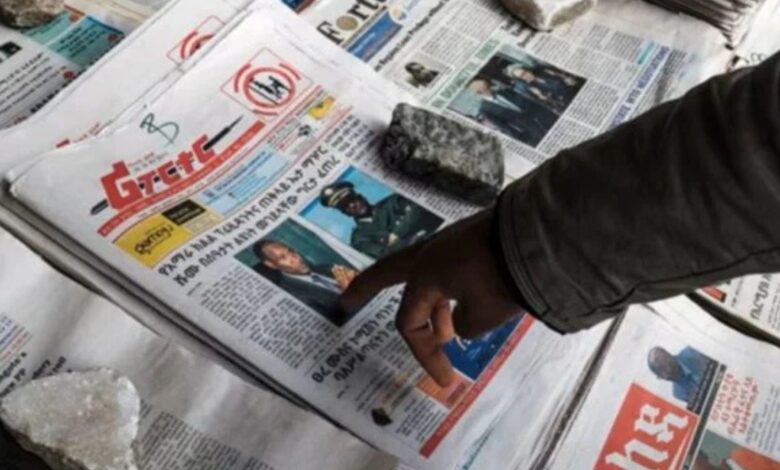
In a poignant and incisive analytical report, Addis Standard has observed that the 2026 World Press Freedom Day is being commemorated under a bitter irony across the Horn of Africa.
The publication asserted that while “peace” is loudly invoked in official rhetoric, it remains a painful abstraction in reality.
Addis Standard characterized the current governance in Ethiopia under Prime Minister Abiy Ahmed as a kakistocracy, where early promises of renewal have been systematically replaced by a repressive apparatus.
Addis Standard clarified that the declarative optimism of the African Union regarding press freedom sharply collides with a harsher ledger of facts.
The report cited data from the Committee to Protect Journalists (CPJ), confirming a steady escalation in violence against media professionals, including imprisonment without trial and targeted killings.
The platform further explained that in Ethiopia’s ongoing conflicts in Oromia, Amhara, and Tigray, the boundary between legitimate journalism and criminality has become dangerously nebulous, making the act of reporting a life-threatening risk.
The report highlighted the dual nature of violence against the press, noting that if state repression is the physical threat, social media represents a more insidious form of harm.
Addis Standard pointed out that journalists are no longer only “stabbed” by political authority but are increasingly “shot in the heart” by coordinated online campaigns of disinformation.
The publication remarked that platforms like TikTok and Facebook have become volatile spaces where truth is often sacrificed for virality.
Addis Standard recounted the chilling impact of the 2020 assassination of artist Hachalu Hundessa, describing it as a pivotal moment that triggered a wave of detention and exile for many journalists.
The report emphasized that for those forced into exile, the experience is not merely geographical but a state of mind that fractures identity.
Addis Standard maintained that while independent media has been largely dismantled within the country, a resilient spirit of resistance is taking shape through diasporic media and encrypted networks.
In its concluding remarks, Addis Standard queried whether journalism in Ethiopia is truly dying or being reborn in alternative forms.
The outlet reiterated its commitment to the profession, stating that while journalism may be suppressed and constrained, it remains an indispensable practice for checking power and recording history.
The report finalized its message by stressing that the current era demands the active defense of truth, which is now written in scars, exile, and unfinished testimonies.
Read more
How Abiy Ahmed’s Pursuit of a “Golden Past” Destabilizes Ethiopia’s Future