Ambassador Dr. Mohamed Hegazy Writes: Ambassador Ahmed Sedky — An Egyptian Diplomat on the Front Lines of Africa’s Struggle for Liberation

In the history of Egypt’s role in Africa, Cairo was not merely a political capital following developments across the continent. At various stages, it became a center of the African liberation movement, a meeting place for leaders of independence movements, and a platform for Egyptian diplomacy advocating the right of African peoples to freedom and independence.
Among the Egyptian diplomats whose names became associated with this period was Ambassador Ahmed Sedky, who represented a model of a diplomat who combined official service with a genuine commitment to the causes of African liberation. He contributed to articulating Egypt’s position in support of African peoples during a particularly important period in the continent’s history.
Ahmed Sedky held a number of important diplomatic positions and served as Egypt’s ambassador in several European capitals, including Rome, Lisbon, and Paris. These capitals were of considerable importance in following colonial issues and African liberation movements, given the close ties that several African countries at the time had with the European colonial powers.
Paris, however, was not merely a European diplomatic posting for Sedky. In the late 1980s and early 1990s, the French capital was a venue for extensive African, Arab, and international political contacts. The Egyptian ambassador was involved in this network of contacts by virtue of his position, experience, and connections with the African continent.
This highlights the importance of his role in contacts related to the Mauritania–Senegal crisis. Paris was connected to Egyptian mediation efforts, and the residence of the Egyptian ambassador became one of the venues where important political meetings and communications took place.
Thus, Sedky’s role evolved from direct African diplomacy during the liberation era into a diplomacy of mediation and engagement during a new phase in the continent’s history.
Egypt’s role in Africa was not separate from the international network of relations surrounding the liberation movements. Cairo recognized early on that the struggle for African independence was not merely a local issue concerning each people separately, but rather a political, legal, and humanitarian cause with international dimensions. The success of liberation movements required broad political, diplomatic, and media support.
Within this framework, Egyptian diplomats played an important role in conveying Cairo’s message to international capitals, defending the right of African peoples to self-determination, and supporting African causes within international organizations and forums.
Ahmed Sedky was among those diplomats whose work was closely associated with the African portfolio. He also served as Assistant Minister of Foreign Affairs for African Affairs, a responsibility reflecting his position within the system responsible for shaping and implementing Egypt’s policy toward the continent.
A Testimony from Personal Experience
My testimony about Ahmed Sedky has particular significance because I worked closely with him and had the opportunity to observe his performance in the field of African affairs.
Based on that experience, I can say that he was an outstanding diplomat, devoted to his work and deeply fond of Africa. For him, dealing with African issues was not simply a professional assignment. He had a genuine interest in the continent, its peoples and their causes, and in the historic role Egypt had played in supporting African liberation movements.
Diplomats of this kind were part of an Egyptian diplomatic school that emerged at a time when Africa was one of the principal spheres of action of Egyptian foreign policy.
The Photograph: A Document from Diplomatic Memory
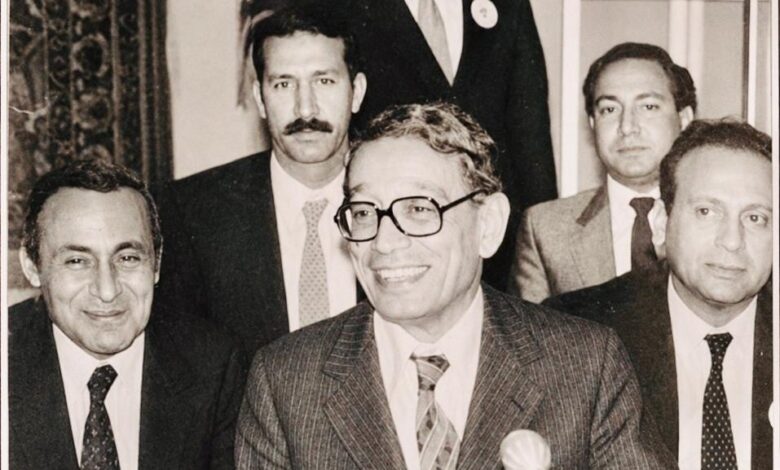
The photograph accompanying this article adds a documentary dimension to this testimony. Ambassador Ahmed Sedky appears on the far left, during an official diplomatic occasion, in a scene that reflects an aspect of Egyptian diplomatic work during that period.
The value of the photograph lies not only in the people appearing in it, but also in the fact that it forms part of the visual memory of a generation of Egyptian diplomats who worked during an era when diplomacy was an essential instrument for supporting liberation movements and strengthening Egypt’s presence in Africa.
Cairo: A Platform for Liberation Movements
Egypt’s role in supporting African liberation movements was one of the most important features of Cairo during the 1950s and 1960s.
The Egyptian capital became a space where African national liberation leaders could meet, a center for political, media, and diplomatic communication, and a window through which liberation movements could reach the wider world.
Therefore, describing Cairo as the “Capital of the African Struggle” is based not only on the political positions adopted by the Egyptian state, but also on a broad network of diplomats, intellectuals, journalists, universities, and institutions that each contributed, in their respective fields, to building Egypt’s bridges with Africa.
Diplomats stood at the forefront of this system. They carried Cairo’s message to African, European, and international capitals, defended the causes of independence, and helped transform Egypt’s solidarity with Africa into concrete foreign-policy positions and diplomatic action.
A Memory That Must Not Be Forgotten
Revisiting the career of Ambassador Ahmed Sedky is not merely an attempt to recall the life of an Egyptian diplomat. It is also an effort to recover a period in the history of Egyptian foreign policy when Africa stood at the heart of Egypt’s national project, and when Cairo played a role that extended beyond its national borders to become one of the influential capitals in the African liberation struggle.
This is why it is important to document the testimonies of those who experienced that period and to preserve the photographs, documents, and personal memories that can help new generations understand how Egypt’s relationship with Africa was shaped, and how Cairo became a political and diplomatic space that embraced the causes of liberation and independence.
For me, Ahmed Sedky remains one of the figures who deserve to be restored to this historical memory: an outstanding, dedicated diplomat with a deep affection for Africa, who served at a time when Egyptian diplomacy was part of a struggle extending beyond the borders of the state — the struggle of African peoples for freedom and independence.
Cairo, the Capital of the African Struggle — is not merely a title for a historical period. It is a living memory created by men and women who believed that Africa’s freedom was part of Egypt’s mission and historic role.
read more