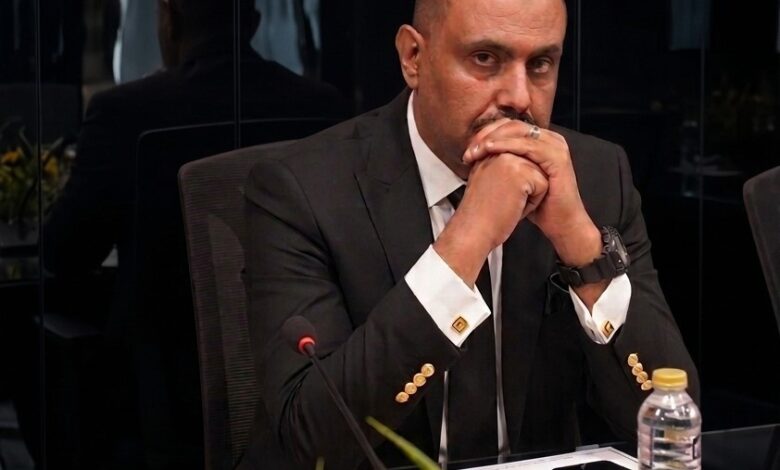
by : Ramy Zohdy
Not every country that possesses instruments of influence is capable of transforming them into genuine power. Nor can every power that commands financial resources, military capabilities, or advanced technology earn the trust of peoples or establish a lasting place in the collective consciousness of nations.
In the Egyptian-African context, we are dealing with a distinctive model of regional influence, one that is not founded solely on geography, history, or military and economic capabilities, but rather on an accumulated system of civilizational, humanitarian, political, cultural, and institutional ties.
These interconnected assets have given Egypt an exceptional standing across the African continent, one that cannot be confined to a particular political era or measured solely through conventional diplomatic indicators.
The uniqueness of Egypt’s presence in Africa stems from a fundamental reality: Egypt did not approach the continent as a sphere of influence in which to seek domination, markets for its products, or opportunities to accumulate political gains.
Rather, Egypt was present at pivotal moments in Africa’s history as a partner in the struggles for liberation and independence, the establishment of national states, and the foundations of collective African action.
This historical legacy is not merely a recollection of glorious chapters from the past; it represents one of the most significant sources of Egypt’s soft power and a strategic asset that must be harnessed in shaping the future of Egyptian-African relations.
Since the 1950s, Egypt has played a prominent role in supporting African national liberation movements. Cairo opened its doors to political leaders and liberation movements from across the continent, providing them with political, media, and diplomatic support in their struggle against colonialism.
This was not simply an occasional expression of solidarity; it reflected an early Egyptian political vision that recognized that Egypt’s independence could not be complete in isolation from the independence of its African surroundings, and that liberating the continent from colonial rule was essential to building a more just and independent regional order.
Among the most notable manifestations of this role was Cairo’s hosting of offices representing numerous African liberation movements and providing a platform for national leaders who would later become prominent figures in their countries’ histories.
This included support for the Algerian cause and liberation movements across Eastern and Southern Africa. Egypt was also among the founding states of the Organization of African Unity in 1963 and contributed to laying the foundations of collective African action at a time when the continent was transitioning from a colonial landscape into a political map of independent nations and republics.
An important point deserves particular attention here: Egypt was not merely among the countries that welcomed African independence; it was also among the forces that helped create the political and diplomatic environment necessary for its realization, strengthen international recognition of national liberation movements, and support peoples’ right to self-determination.
This historical contribution gives Egyptian-African relations a depth that transcends immediate political and economic calculations, as it is rooted in a shared political memory that cannot easily be erased or replaced.
However, history alone cannot sustain influence. Relying exclusively on past achievements without renewing them risks reducing historical standing to political nostalgia.
One of the most significant dimensions of Egypt’s distinction, therefore, lies in its possession of a diverse and interconnected set of instruments of influence, combining soft power, institutional capacity, development expertise, and political and security engagement.
Ancient Egyptian civilization stands at the forefront of these instruments, not merely as a national Egyptian heritage, but as one of the foundational components of humanity’s and Africa’s civilizational memory.
Through its contributions to science, knowledge, arts, administration, and engineering, ancient Egyptian civilization represents a shared source of pride and provides Egypt with an exceptional capacity for cultural engagement with African peoples.
Contemporary Egyptian Arabic, together with its extensive presence in artistic production, television, cinema, and media, has also contributed over decades to creating broad spaces of mutual understanding and popular communication with significant segments of African societies, particularly in countries historically connected to Egyptian media and entertainment.
The historic role of Al-Azhar Al-Sharif must also be recognized as one of the most important religious and educational bridges between Egypt and Africa. Its influence extends beyond religious education to the development of extensive networks of human and academic relations through thousands of African students and graduates.
Al-Azhar does not simply provide education; it contributes to the development of religious, intellectual, and community leaders who return to their countries with direct knowledge of Egyptian society, its institutions, and its culture.
Similarly, the Egyptian Church, particularly the Coptic Orthodox Church, represents an important historical and spiritual bridge with several African communities, most notably in Ethiopia and Eritrea. These ecclesiastical relations extend beyond religious communication into broader areas of cultural, humanitarian, and historical interaction.
Such ties, with their distinctive character, constitute an important dimension that can contribute to strengthening rapprochement and mutual understanding, without imposing political responsibilities on religious institutions that fall outside their natural role.
The institutional strength of the modern Egyptian state is another major factor in renewing Egypt’s influence across the continent. Since 2014, Egypt has witnessed extensive transformations in infrastructure, energy projects, transportation networks, roads, ports, and new cities, alongside the development of its industrial, military, and digital capabilities.
Despite the differences in national experiences and economic circumstances among African countries, Egypt’s development experience has provided a practical model from which African states can draw valuable lessons, particularly in major project planning, infrastructure development, electricity and energy management, institutional capacity-building, and industrial localization.
What gives Egypt’s experience its value for Africa is not the claim that it can be replicated wholesale, but rather its ability to offer expertise, transfer technology, and facilitate the exchange of experiences in ways that reflect the needs and particular circumstances of each country.
The continent does not need ready-made models as much as it needs partners capable of transforming ideas into practical, implementable projects.
Egypt further strengthened its continental presence through its presidency of the African Union in 2019. This presidency reaffirmed Cairo’s return to a prominent position within continental affairs and advanced important priorities relating to development, economic integration, reform of African Union institutions, peace and security, and post-conflict reconstruction.
It was not merely a ceremonial responsibility, but an opportunity to reaffirm Egypt’s institutional role in supporting collective African action.
Economically, Egypt possesses significant assets that qualify it to play a greater role in reshaping the landscape of African trade and investment.
Its geographical position connecting North and East Africa, the Suez Canal as one of the world’s most important trade arteries, together with its network of ports, roads, industrial zones, and productive capabilities, all provide Egypt with an opportunity to become a regional hub for production, distribution, and logistics services serving African markets.
The figures reveal an economic foundation upon which further progress can be built. Trade between Egypt and African Union member states reached approximately USD 9.9 billion in 2024, compared with USD 9.2 billion in 2023, according to data from Egypt’s Central Agency for Public Mobilization and Statistics (CAPMAS).
Egyptian exports to these countries amounted to approximately USD 7.8 billion, while imports stood at around USD 2.1 billion. Despite the significance of these figures, they remain below the actual potential of African markets, revealing a gap between Egypt’s possible economic presence and its achievements on the ground.
This highlights the need to move beyond the traditional concept of trade exchange toward establishing long-term productive and investment partnerships. Such partnerships should involve creating factories, distribution centers, and joint ventures across African countries, developing value chains, strengthening local manufacturing, and capitalizing on the opportunities offered by the African Continental Free Trade Area (AfCFTA). The future does not belong merely to those who sell more, but to those who participate in creating value and building mutually beneficial interests.
The Egyptian Agency of Partnership for Development (EAPD) is another important institutional instrument in this process. Through its training programs, capacity-building initiatives, technical assistance, and development projects in healthcare, education, agriculture, irrigation, energy, and other sectors, the Agency reflects an important philosophy: investing in African people and strengthening the institutional capabilities of sister countries can generate more sustainable and lasting influence than many traditional forms of engagement.
No discussion of Egypt’s instruments of influence would be complete without addressing its military and security footprint.
The Egyptian Armed Forces have a long history of cooperation with their African counterparts, encompassing training, qualification, exchange of expertise, technical and defense cooperation, efficiency enhancement, and capacity-building.
These relations have extended across generations of African military leaders who have received training, education, or professional development within Egyptian military institutions.
The importance of this cooperation goes beyond its immediate military dimension, becoming an integral component of strategic trust-building between states. Joint training, exchange of expertise, and the development of national capabilities in counterterrorism, border security, and peacekeeping are important instruments for supporting African stability and strengthening countries’ ability to confront emerging threats. In recent years, Egypt has implemented numerous training programs for African military and security personnel, involving countries from different regions of the continent, reflecting the expanding scope and diversity of this cooperation.
More importantly, Egyptian-African military cooperation should not be viewed merely as a relationship between defense institutions, but rather as one of the pillars of collective African security, particularly amid the escalation of terrorism, transnational organized crime, illicit arms trafficking, human trafficking, drug smuggling, and growing threats associated with fragile borders and unstable regions.
In my assessment, another defining element of Egypt’s distinction is its ability to operate across multiple dimensions of African engagement.
Egypt is simultaneously an Arab, African, and Mediterranean country, and an active member of Arab, Islamic, African, and international institutions. This multidimensional position enables it to build bridges between overlapping geopolitical spheres and undertake mediation, coordination, and diplomatic facilitation in highly complex regional issues.
Nevertheless, possessing instruments of influence does not automatically guarantee their effective utilization. Significant challenges must be addressed openly, foremost among them the growing international competition over Africa and the expanding presence of China, Russia, Türkiye, Gulf countries, Europe, and the United States.
These developments are accompanied by shifts in the priorities of several African governments, whose decisions are increasingly shaped by considerations of investment, financing, technology, knowledge transfer, and tangible economic interests.
African peoples no longer measure the credibility of partnerships by what is said at conferences and summits, but by what they experience on the ground in terms of employment opportunities, development projects, public services, and improvements in living standards. Consequently, preserving Egypt’s position requires translating its historical reservoir of trust into tangible outcomes, strengthening its economic and investment presence, developing its cultural and media outreach, expanding scholarships and training programs, and broadening cooperation with the private sector, universities, research centers, and civil society organizations.
I believe the coming phase requires Egypt to formulate an integrated strategy for power and influence in Africa, one that does not separate diplomacy from economics, security from culture, or individual policy files from the broader strategic framework.
Such a strategy should position the private sector as an essential partner in Egyptian African policy, universities and research centers as instruments for producing knowledge about the continent, religious and cultural institutions as bridges of communication, military and security cooperation as a foundation for stability, and development projects as practical evidence of Egypt’s commitment to genuine partnership.
Egypt does not need to invent a new African identity or establish an entirely new position on the continent. Rather, it needs to renew its historical standing through contemporary instruments and strengthen its ability to transform its civilizational, political, and humanitarian assets into sustainable shared interests. True power does not lie in being present in every issue, but in becoming a trusted partner when peoples seek development, when governments seek expertise, when states confront challenges to their security and stability, and when younger generations aspire to a future capable of fulfilling their ambitions.
Perhaps the fundamental distinction between Egypt and other powers competing for influence in Africa is that Cairo possesses a historical reservoir of continental engagement that cannot simply be purchased, imported, or manufactured within a few years. Yet this legacy must never be treated as an eternal guarantee.
Historical trust provides Egypt with an advanced starting position, but it does not exempt it from the responsibility of renewal, hard work, and tangible achievement.
Africa is not merely a geographical extension of Egypt’s national security, nor simply a promising market for exports and investment. It is a strategic depth, a partner in shaping the future, and a vital arena where interests, opportunities, and challenges intersect. With its history, civilization, institutions, capabilities, and accumulated expertise, Egypt possesses the instruments necessary to become one of the continent’s key contributors to balance, integration, and development.
Ultimately, the equation governing Egypt’s presence in Africa remains clear: there can be no sustainable influence without trust, no trust without credibility, no credibility without equitable partnership, and no genuine partnership unless African citizens feel that Egypt’s presence on their continent contributes to their future as much as it serves Egypt’s national interests.
That is the kind of power that cannot be created through commercial deals alone or reduced to political alliances. It is a power built by peoples, sustained by shared interests, and safeguarded by the legacy of historical positions.
* Ramy Zohdy .. Expert in African Political and Economic Affairs, Investment, Intra-African Trade, and International Cooperation
read more
The Truth First: the Julius Nyerere Dam, While Egypt Played a Key Role in Its Implementation