From Neighborhood to Partnership .. Arab-African Integration: A Strategic Necessity in a World Reshaping Its Foundations

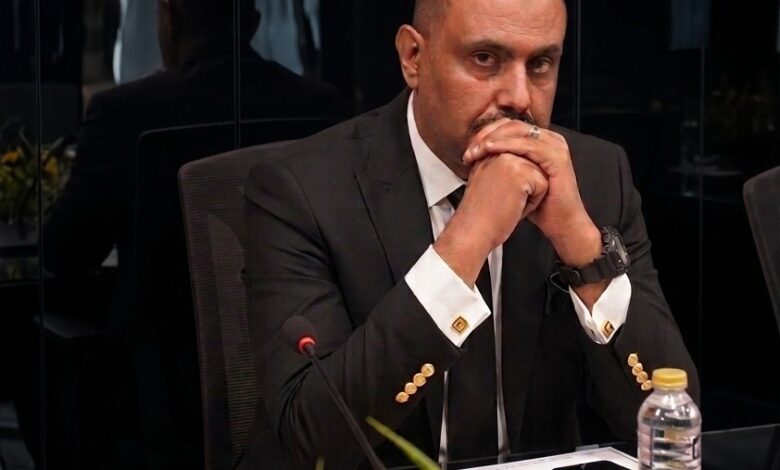
Ramy Zohdy proposes the establishment of “an Arab-African Private Sector Council that operates on a permanent basis and includes sectoral working groups covering agriculture and food, energy, industry, pharmaceuticals, technology, transportation, financial services, and tourism.”
By : Ramy Zohdy — African Affairs Expert
The discussion of Arab-African cooperation is no longer a diplomatic luxury, a seasonal occasion repeated in summit communiques and conference statements, or merely an invocation of the history, geography, and cultural ties that connect the two shores of the Red Sea, North Africa, and the continent’s eastern and western extensions.
We are facing a strategic space that could become one of the world’s most important centers of economic and political growth over the coming decades, provided that we move from the idea of cooperation as a general concept to the notion of integration as a policy framework built on institutions, interests, and measurable and implementable projects.
The real problem is not the absence of the necessary ingredients, but perhaps their abundance without being sufficiently transformed into a coherent system , The Arab world and Africa together possess enormous human, economic, and geographic weight, natural resources, promising markets, maritime corridors, and a strategic position between Asia and Europe. Yet economic relations between the two sides remain far below the potential offered by these assets.
This is precisely where we need to redefine the question. The question is no longer: What can the Arabs offer Africa, or what can Africa offer the Arabs? The more mature question is: How can both sides create shared value within production, trade, and investment chains extending from the Gulf and North Africa to East, West, Central, and Southern Africa?
This shift in thinking is not merely linguistic. It is economic, political, and strategic.
Africa is entering the current decade with unprecedented demographic weight. The continent’s population has exceeded 1.5 billion people according to recent estimates, while projections indicate that it could approach 2.5 billion over the next three decades. The continent also has an exceptionally young population structure, making it not only a huge future consumer market, but also an enormous base for labor, production, entrepreneurship, and digital services.
These figures simply mean that anyone seeking to understand the economy of the future cannot treat Africa as a peripheral space within the global economic system. Africa will be an essential component of global demand, labor markets, supply chains, food and energy equations, strategic minerals, and the digital economy.
At the same time, the Arab world possesses equally significant strengths, beginning with its geographical position linking Asia, Africa, and Europe, followed by capital, sovereign wealth funds, expertise in infrastructure, energy, and logistics, and extending to port networks, economic zones, airports, and financial and investment service companies.
When these advantages converge with Africa’s natural and human resources and its markets, the outcome is not merely an increase in trade volumes. It is the possibility of building an entirely new economic system.
But we must be frank. Intra-African trade itself remains below its potential. According to the 2025 African Trade Report, trade within the continent still accounts for only around 14% of Africa’s total official exports and imports, despite the improvement recorded in recent years. In 2024, intra-African trade rose significantly to approximately $220.3 billion, an increase of 12.4%, compared with around $192.2 billion in 2023.
These are not discouraging figures as much as they are an indication of the scale of the opportunity. When a continent consists of more than 50 countries and approaches a population of 1.5 billion people, yet its internal trade remains relatively limited, this means there is enormous untapped space for localizing production, improving supply chains, developing transportation, connecting markets, harmonizing standards, facilitating payments, and building cross-border industries.
This is where the value of Arab-African cooperation becomes evident.
In my view, it is better not to regard Arab countries as an external market for Africa, nor Africa as merely a market for Arab exports. The more effective model is for both sides to become partners in production.
Instead of an Arab country importing an African raw commodity and then re-exporting or processing it elsewhere, a joint value chain can be built. Instead of an African country viewing an Arab investor simply as a financier of an individual project, it can regard that investor as a partner in an integrated industrial, agricultural, or logistics ecosystem.
This distinction is what creates sustainable development.
Food security, for example, represents one of the largest fields of Arab-African integration. The Arab world has growing demand for food, while Africa possesses agricultural land, water and climatic resources, and enormous potential to increase agricultural production. But the issue is not simply about acquiring land or exporting crops. It is about building an integrated system that begins with agricultural research, seeds, modern irrigation, food processing, cold chains, storage, transportation, insurance, and financing, and ultimately reaches the market.
This model can transform the relationship from food trade into a partnership in food security.
That makes agriculture one of the most important sectors that should be at the forefront of the Arab-African cooperation agenda, particularly in light of the fragility of global supply chains exposed by successive crises in recent years.
The energy sector is no less important.
Africa possesses enormous reserves of oil, gas, minerals, and renewable energy resources, while a number of Arab countries possess extensive expertise, financing capabilities, and implementation capacity in both conventional and renewable energy. Accordingly, we can move from selling and purchasing energy toward building the energy industries themselves, including green hydrogen, solar power, wind energy, transmission and storage networks, and related technological components.
The issue is not merely electricity generation. It is about transforming energy into an industrial competitive advantage.
A country with cheap and reliable electricity can attract industry. A country that develops ports and roads can attract trade. A country with a processing industry can multiply the value of its resources. And a country that connects all of this with digital financing can build a more competitive economy.
From this perspective, Arab investment in Africa and African investment in Arab countries become part of a strategy to reshape value chains, rather than simply movements of capital.
UNCTAD data reveals the growing investment potential of Africa. Foreign direct investment flows into the continent rose to approximately $97 billion in 2024, compared with $55.4 billion in 2023, an increase of around 75%. Flows into North Africa also increased significantly, driven primarily by the major surge in Egypt.
These figures do not mean that Africa has solved its financing challenge. Quite the opposite: they mean that the African market is attracting increasing amounts of capital, competition for African opportunities is intensifying, and those who fail to establish an organized economic presence today may find themselves excluded from entire sectors of the continent’s economy tomorrow.
Here, we must move from individual investment to institutional investment.
We need joint Arab-African investment funds, cross-border project financing platforms, credit guarantees, mechanisms to reduce investment risks, trade insurance, financing instruments for small and medium-sized enterprises, and stronger links between Arab financial institutions — including sovereign wealth funds, development banks, and specialized institutions — and their African counterparts.
There is already an institutional foundation upon which we can build. The Arab-Africa Trade Bridges Program works to support trade and investment, with the participation of Arab, African, and Islamic financial and development institutions. Institutions such as the Arab Bank for Economic Development in Africa represent a historic institutional bridge between the two sides. Arab-African initiatives have also focused on sectors such as food security, infrastructure, financing, and trade.
But the challenge is to move from a multiplicity of initiatives toward their integration.
We have many institutions, many programs, many forums, and many memoranda of understanding. Yet we still need an Arab-African mechanism with greater capacity to transform ideas into projects, projects into investments, and investments into jobs and added value.
Here, I propose that we think more boldly about establishing an Arab-African system for development, investment, and intra-regional trade rather than simply organizing another annual forum.
A system capable of identifying priority projects, collecting market data, determining the needs of each country, connecting investors with opportunities, providing feasibility studies, guarantees and financing, monitoring implementation, and measuring developmental and economic returns.
We need an Arab-African project bank, not merely an information bank.
We need a live database that tells the Arab investor: this country needs a fertilizer plant; this one needs a power station; this one needs grain silos; this one needs a logistics zone; this one possesses raw materials requiring processing; and this one has a consumer market with strong growth potential.
And in the other direction, it should tell the African investor: these Arab markets need your products; these Arab companies are looking for partners; these ports can serve as your gateways; and these financial institutions can finance your expansion.
The modern economy does not move solely on resources. It moves on information reaching decision-makers at the right time.
This brings us to digital trade and cross-border payments.
It is impossible to build large-scale Arab-African trade while the movement of money between countries remains more complicated than the movement of goods themselves. Developing payment and settlement systems, leveraging African platforms such as PAPSS, and eventually connecting them with Arab payment networks can reduce the cost of trade, decrease excessive reliance on intermediary currencies, and open the door for small and medium-sized enterprises to enter new markets.
Small and medium-sized enterprises should be at the heart of this equation because they are the most capable of rapid expansion, innovation, and job creation.
In this context, Arab-African trade should not remain a trade conducted primarily by governments and major corporations. It should become the trade of businesspeople, manufacturers, farmers, technology companies, logistics firms, young entrepreneurs, and startups.
Here, Egypt can play a pivotal role.
Egypt is not merely an Arab and African country at the same time. It possesses a unique position that qualifies it to serve as a connecting platform between the Gulf, North Africa, East Africa, and the continent’s southern extensions.
The Suez Canal, Egyptian ports, the Suez Canal Economic Zone, road and airport networks, the industrial base, and Egypt’s membership in the African Continental Free Trade Area are all assets that can make Egypt a hub for Arab-African trade and investment.
The figures confirm that there is already a foundation upon which to build. Trade between Egypt and African Union countries rose to $9.8 billion in 2024, compared with $9.2 billion in 2023, an increase of 6.5%. Egyptian exports to African countries reached approximately $7.7 billion, while imports stood at around $2.1 billion.
But the question Egypt should be asking is not: Did exports increase?
The more important questions are: Can we double them? Can we make Egypt a platform for re-exporting African products to Arab and Asian markets, while also serving as a gateway for Arab products into Africa? Can we build joint Egyptian-African production chains instead of relying solely on conventional trade? Can we transform ports and economic zones into manufacturing and distribution centers rather than mere transit points?
These are the questions that deserve to be placed on the table of government, the private sector, political parties, and civil society institutions.
Arab-African integration also requires us to rethink the concept of infrastructure.
Ports and roads alone are not enough.
We need integrated trade infrastructure: economic corridors, logistics zones, warehouses, grain silos, cold chains, customs centers, digital systems, insurance, financing, and multimodal transportation services.
A genuine trade corridor does not begin with the road and end at the port. It begins with the producer and ends with the consumer.
This opens the door to a larger strategic concept: connecting Arab-African corridors, particularly those linking the Red Sea with East Africa, to Egyptian and North African ports, and then onward to European markets.
Geography alone does not create value. The ability to activate geography creates value.
This is where the importance of the Red Sea emerges.
The Red Sea should not be viewed merely as a maritime navigation route, but as a shared economic space among the countries bordering it and those connected to its commercial movement.
Egypt, Sudan, Saudi Arabia, Djibouti, Somalia, Yemen, and the countries of East Africa could become part of a broader economic system if the Red Sea is treated as a zone of connectivity rather than a dividing line.
It is also essential that Arab-African cooperation not be limited to the economy in its traditional sense.
Education, training, technology transfer, healthcare, pharmaceuticals, artificial intelligence, the digital economy, cybersecurity, and scientific research are all fields that can become new areas of partnership.
Africa does not only need financing for projects. It also needs the knowledge that makes those projects more efficient.
The Arab world does not only need markets. It needs to build long-term production and service networks.
Therefore, establishing Arab-African vocational and technical training programs, connecting universities and research centers, and developing joint programs in agricultural technology, artificial intelligence, energy, and pharmaceuticals could have a greater impact than dozens of traditional conferences.
In my assessment, the greatest mistake Arab-African relations could make is to continue treating Africa solely as a political or diplomatic file.
Africa is an economy.
Africa is a market.
Africa is resources.
Africa is human capital.
Africa is corridors and ports.
Africa is the future of industry, food, energy, and strategic minerals.
At the same time, the Arab world is not merely a financier or investor. It is also a major market, a strategic location, and a source of industrial, financial, and logistics expertise that can complement African capabilities.
Therefore, the relationship must be based on equality and mutual interest, rather than the donor-recipient model.
We do not need a relationship based on intermittent aid as much as we need partnerships that create wealth.
We do not need to export raw materials and import finished products. We need joint manufacturing.
We do not need isolated projects. We need value chains.
We do not need dozens of memoranda of understanding. We need contracts, projects, and measurable results.
We do not need more summits as much as we need more implementation.
This, precisely, is what Arab-African thinking should look like in the coming phase.
The world is changing rapidly.
Economic centers of power are being redistributed. Supply chains are being reshaped. Competition over minerals, energy, food, and markets is intensifying. Trade protectionism is increasing, while technology is redefining the elements of economic power.
In such a world, a region that fails to build its own economic networks will inevitably become dependent on the networks of others.
This is where the strategic value of Arab-African integration lies.
The objective is not to create a closed bloc confronting the rest of the world, but to build an open bloc capable of negotiating from a stronger position.
Africa needs partners who can help it move from exporting resources to processing and manufacturing them.
The Arab world needs new markets, investments, and partnerships that reduce the risks of excessive dependence on a limited number of global markets.
This is not a relationship based on aid.
It is a relationship based on mutual interests.
It is also useful to examine the existing experiences. The movement toward regional value chains is expanding, and Arab-African economic forums are increasingly focusing on investment, trade, food security, and infrastructure. The various initiatives are also opening practical spaces for trade, financing, and investment, while African and Arab financial institutions are emerging as instruments that can be further developed to serve a new phase of cooperation.
But success will not be achieved if the public sector remains the sole driver.
The private sector must have a seat in the room where Arab-African economic priorities are shaped, rather than remaining in the last rows of conferences.
Business leaders must be partners in defining priorities, not merely guests invited to sign memoranda.
Chambers of commerce, industry federations, exporters, and investors also need permanent networks rather than temporary events.
This is why we can consider establishing an Arab-African Private Sector Council that operates on a permanent basis and includes sectoral working groups covering agriculture and food, energy, industry, pharmaceuticals, technology, transportation, financial services, and tourism.
This council could periodically issue an investment and trade opportunity map identifying market size, risks, required financing, and potential partners.
This type of mechanism is what can move cooperation from the level of rhetoric to the level of the real economy.
In Egypt, we could develop a broader national initiative under the title “Egypt: The Gateway for Arab Investment in Africa,” not merely to market Egypt itself, but to position it as a platform for bringing together Arab capital and expertise with African opportunities.
This could be connected to Mediterranean and Red Sea ports, the Suez Canal, the Suez Canal Economic Zone, industrial zones, and Egypt’s transportation networks, while developing specialized financial, legal, and logistics services for investors seeking to expand across Africa.
This also requires developing Egypt’s capacity to understand African markets.
Africa is not a single market, and it cannot be approached through a single model.
East Africa differs from West Africa. Central Africa differs from Southern Africa. Francophone countries have business environments different from those of Anglophone countries. Coastal economies differ from landlocked economies.
Success therefore requires deep geographic and sectoral specialization.
An investor entering Africa without studying the political, regulatory, cultural, logistical, and financial environment of the target market may turn a project into a cost rather than an opportunity.
This is where the importance of specialized African affairs research centers, think tanks, and consulting institutions becomes clear, particularly their role in providing information, assessing risks, and developing scenarios.
In this context, economics cannot be separated from politics.
Trade requires stability.
Investment requires confidence.
Confidence requires stable political relations and effective institutions.
Arab-African integration must therefore have a clear political and strategic dimension, particularly regarding food security, water security, energy, Red Sea security, counterterrorism, organized crime, irregular migration, and climate change.
These issues do not recognize political borders.
A state that deals with them alone will pay a higher price than one that builds intelligent regional alliances.
Perhaps one of the most important lessons is that geography alone is not enough to build integration, just as history alone does not create interests.
Interests require institutions.
Ideas require financing.
Agreements require implementation mechanisms.
Ambitions require measurable indicators.
Therefore, I believe that the next phase should be built around five major transformations in Arab-African thinking: from aid to investment; from exporting raw materials to creating added value; from bilateral trade to regional value chains; from conferences to implementation platforms; and from government-to-government relations alone to a comprehensive partnership involving governments, the private sector, financial institutions, universities, research centers, and civil society.
If we succeed in achieving these transformations, the Red Sea can become an economic hub rather than merely a zone of tension and risk. North Africa can become an industrial and logistics platform. East Africa can become a center for production and trade. The Gulf can become a major source of financing and investment. Egypt can serve as a connecting link and logistics and industrial platform, while Africa provides demographic depth, resources, markets, and opportunities.
Only then will the discussion of Arab-African integration become a discussion about a genuine economic project.
Perhaps the current moment is the most appropriate time to put this project back on the table, not as a political dream, but as a rational response to the transformations taking place in the global economy.
Africa needs long-term partnerships.
The Arab world needs new circles of growth.
And the world as a whole needs more diversified markets, corridors, and supply chains.
The equation already exists.
The resources exist.
The markets exist.
The capital exists.
The expertise exists.
Even the institutions exist.
What we lack is bringing all these elements together within a single strategy.
Integration does not begin when interests become identical. It begins when we recognize that differences in interests can be transformed into a smarter distribution of roles.
This is precisely where the opportunity lies.
To move from a relationship based on historical proximity to a strategic economic partnership; from intermittent cooperation to institutional integration; from the exchange of goods to the creation of value; and from treating Africa as a space of opportunities to recognizing it as one of the centers of gravity of the global economy of the future.
The world does not wait for those who merely possess resources. It rewards those who know how to connect them.
Economic strength does not belong simply to those who possess markets, but to those who can reach them.
Influence is not built by raising slogans, but by creating interests that others find difficult to do without.
This is the true meaning of Arab-African integration.
It is not a project of sentiment, but a project of interests.
It is not an attempt to revive the past, but an investment in the future.
It is not an attempt to build a new alliance in an old world, but an attempt to build a stronger Arab-African position in a world that is changing every day.
From my position as an Egyptian politician and expert in African affairs, economics, trade, and intra-African investment, I believe Egypt can be one of the intellectual and strategic engines of this transformation, not as a country seeking to lead Africa or the Arab world, but as a country capable of connecting multiple circles of interest, transforming its geographical position into economic value, translating its political relations into investment partnerships, and turning its Arab and African membership into a competitive advantage.
The coming phase does not need more rhetoric about a shared destiny.
It needs the creation of shared interests that make that shared destiny an everyday economic reality.
read more
Egypt’s Nile Basin Diplomacy: Advancing Development Through Partnership, Not Obstruction