Requirements for Resuming Studies at Sudanese Universities in Their Original Campuses: An Analysis of Campus Environment Factors and Academic Quality Assurance.

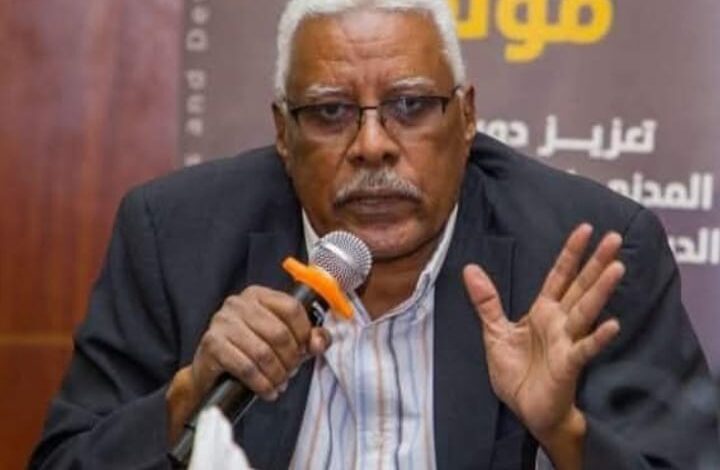
By Prof. Hassan Bashir Mohamed Nour
The issue of Sudanese universities resuming their academic activities from their original campuses represents one of the most sensitive and complex challenges in the post-war phase, This is due to its direct impact on the future of higher education and scientific research, as well as on the safety of students, faculty members, and staff.
Consequently, any decision regarding the reopening of universities should be grounded in an objective, scientific assessment based on campus environment standards, safety and security guarantees, and the capacity to provide the minimal requirements for the educational process, free from non-academic considerations. This article aims to discuss the availability of the essential requirements needed for the return of Sudanese universities to their original campuses in light of current circumstances.
Introduction:
Higher education is one of the most critical pillars of economic and social development and human capital formation. Universities function as institutions for knowledge production, scientific research, and community service.
Therefore, the resumption of university studies should not be viewed merely as an administrative decision to open campus gates; rather, it must be approached as a comprehensive process requiring an appropriate academic, human, and security environment that ensures the safety of all stakeholders and preserves the quality of education and scientific research.
The war that broke out in Sudan in April 2023 generated extraordinary conditions that directly impacted university infrastructure, essential services, and general security, social, and economic conditions. Under these circumstances, a fundamental question arises regarding the availability of the basic elements required to allow universities to return to their original campuses without compromising the standard of education or the safety of their personnel.
1. The Campus Environment and Requirements for Resuming Studies:
The university environment is not limited to physical buildings and lecture halls; it encompasses an integrated ecosystem that includes classrooms, laboratories, libraries, telecommunication and internet networks, health facilities, administrative services, student housing, transportation, and dining facilities, alongside a safe environment that allows studies to proceed normally.
The modern educational process requires equipped laboratories, updated libraries, stable information networks, and lecture halls that meet safety standards, in addition to electricity, water, and sanitation services. These elements constitute the baseline foundation of any academically recognized university institution.
Under current conditions, many universities—especially those located in the capital, Khartoum—have suffered severe damage due to military operations. This raises serious questions regarding the readiness of these institutions to receive tens of thousands of students and employees in accordance with established academic standards.
2. Absence of Essential Basic Services for Living and Working:
The success of the educational process cannot be decoupled from the availability of essential basic services that ensure stable daily life. These services include electricity, potable water, healthcare, pharmaceuticals, communications, and transportation.
Faculty members, staff, and students face immense challenges in accessing these services in several areas affected by the war. Furthermore, individuals with chronic health conditions require regular medical monitoring and a continuous supply of medications—factors that cannot be guaranteed given the ongoing pressures on the healthcare sector. This increases health risks, potentially threatening personal safety and directly impairing the ability of individuals to perform their academic duties.
The impact of service deficiencies extends beyond human welfare to affect the regularity of classes, the administration of examinations, the operation of laboratories and scientific equipment, and the preservation of data and academic references—all of which rely directly on the stability of basic services
3. Impacts of War on Housing and Social Stability:
Large segments of the population in Khartoum, Khartoum North (Bahri), and extensive areas of Omdurman experienced looting and vandalism affecting residential homes and personal property, causing many families to lose basic residential stability.
Consequently, a significant number of faculty members, staff, and students may lack suitable housing upon their return, forcing them to seek rented accommodation amid soaring housing costs. This is compounded by the need to secure alternative energy sources, such as solar power systems, to meet electricity needs adding substantial financial burdens that are disproportionate to current income levels.
In the absence of clear programs to compensate affected individuals or rehabilitate residential areas, family and social stability remains unfulfilled for a broad segment of the university community.
4. Reduced Economic Capacity of Faculty Members and Staff:
The ongoing economic crisis has significantly eroded the purchasing power of salaries and wages to the extent that they no longer cover minimal living costs.
This crisis intensifies when factoring in the costs of housing, transportation, food, healthcare, alternative energy sources, communications, and other essentials that have become imperative under current conditions.
Therefore, requiring faculty and staff to return to university campuses without addressing these economic realities may jeopardize job stability and hinder their ability to dedicate themselves fully to academic duties and scientific research.
5. The Security Environment and Campus Safety:
Personal safety is one of the fundamental conditions upon which the educational process rests. Universities host large populations of students, including female students, alongside faculty, staff, and visitors, necessitating an environment with sufficient levels of security and stability.
In conflict and post-conflict scenarios, issues of community security and civilian protection gain double importance, especially in light of reports documenting violations against civilians, including women, during the war. Therefore, any assessment regarding the resumption of studies must account for the surrounding environment’s capacity to provide safety and protection for all university community members.
6. The Situation of Major Universities in Central Khartoum:
The central region of Khartoum hosts several of Sudan’s largest higher education institutions, including the University of Khartoum, Al-Neelain University, and Sudan University of Science and Technology. These institutions accommodate vast numbers of students, faculty, and administrative personnel.
During the war, this area suffered extensive destruction of infrastructure, facilities, and public services. Government reports have indicated that parts of this district still require extensive rehabilitation efforts before normal activities can resume, as reflected by the relocation of several ministries and government entities to alternative sites.
If the area continues to face structural challenges in accommodating government institutions and associated public services, legitimate questions arise regarding its readiness to host large university communities that rely on continuous electricity, water, communications, transportation, healthcare, catering, security, and safety services.
7. The Impact of an Inadequate Environment on Educational Quality and Academic Evaluation:
The quality of higher education is directly linked to the availability of an appropriate academic environment. Requirements for sound academic evaluation include regular class schedules, adequate faculty availability, functional laboratories and libraries, adherence to accredited credit hours, conduct of examinations under rigorous academic standards, fairness and transparency in assessment, fulfillment of practical training requirements, and adherence to accreditation and quality assurance benchmarks.
Any compromise to these foundational requirements risks degrading the quality of educational outcomes and weakening academic community trust in awarded degrees, particularly if academic standards are bypassed due to exceptional circumstances without accredited academic remedies.
8. Institutional Autonomy, Quality Assurance, and Academic Accreditation:
Higher education globally relies on the principle of institutional autonomy, ensuring that decisions regarding education and scientific research are based on professional and academic standards, quality requirements, and accreditation guidelines.
From this perspective, tying academic decisions to non-academic considerations may raise concerns regarding university autonomy. It could also diminish the confidence of regional and international accreditation bodies in the commitment of Sudanese universities to recognized standards. This, in turn, may negatively affect degree recognition, graduate competitiveness in regional and international labor markets, and the overall standing of Sudanese higher education institutions.
9. Scientific
Research Under Current Conditions:
Scientific research is often the university component most damaged by wars and prolonged crises. Even prior to the war, Sudanese universities struggled with limited funding, low expenditure on scientific research, inadequate laboratory equipment, and restricted access to scientific databases and literature.
The war has exacerbated these challenges through physical damage to infrastructure, laboratory disruption, loss of equipment, dispersion of researchers, and reduced financial resources allocated to universities.
Under these conditions, restoring research activity to requisite levels will be difficult without a comprehensive national program aimed at rehabilitating universities, providing necessary funding, rebuilding scientific partnerships, and securing a stable academic environment.
Conclusion
Resuming university education represents a vital national goal shared by all. However, achieving this goal in a sustainable manner requires establishing baseline academic, human, security, and economic conditions that safeguard the university community and preserve the quality of education and scientific research.
Consequently, any decision regarding the return of universities to their original campuses will be more successful and sustainable if grounded in an independent technical assessment of each university’s readiness. This evaluation should follow clear criteria, including structural safety, baseline service availability, security stability, and the capacity to deliver an educational environment that meets quality assurance and academic accreditation standards.
Rebuilding post-war higher education must form part of a comprehensive national reconstruction framework that prioritizes human capital protection and the preservation of the reputation of Sudanese universities, thereby safeguarding the standing of Sudanese higher education and maintaining regional and international academic confidence in its graduates.
read more
Sudan and Türkiye Sign MoU to Build the First Dedicated LPG Terminal at Suakin Port