Egypt has completed 50 public- and private-sector projects worth approximately $19.9 million under the Green Sharm project, resulting in a reduction of around 85,100 tonnes of greenhouse gas emissions, the Cabinet Media Centre announced on Tuesday.
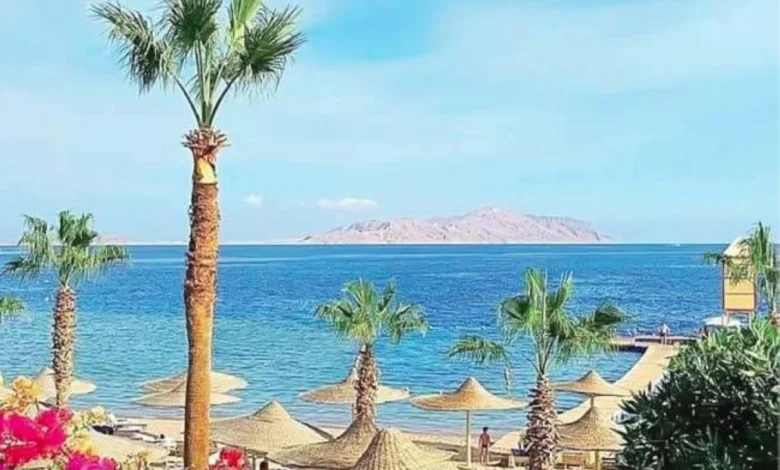
The project is part of the state’s efforts to transform Sharm El-Sheikh into an integrated model for green cities and sustainable tourist destinations, in collaboration with the United Nations Development Programme (UNDP) and the South Sinai Governorate.
The six-year project covers 42 square kilometres of Sharm El-Sheikh’s land area, as well as marine and coastal zones in the Ras Mohammed, Nabq, and Abu Galum protectorates. According to the Cabinet Media Centre, the project has also supported solar power projects with a total capacity exceeding four megawatts, including stations at Sharm El-Sheikh International Airport, Sharm El-Sheikh Museum, and several schools, hospitals, and hotels.
Authorities have also installed 891 solar-powered lighting poles, increasing the city’s total renewable energy capacity to around 55 megawatts, equivalent to nearly 18 percent of its total electricity consumption. The Green Sharm project is designed to promote low-carbon technologies, improve waste management, protect biodiversity, and develop sustainable tourism practices in one of Egypt’s most important Red Sea tourist destinations.
According to UNDP, the project aims to transform Sharm El-Sheikh into “a model integrated and ecologically sustainable tourism city” through a sustainable development strategy, pilot green investments, capacity building, and stronger protection of natural assets.
Egypt has placed the project within a broader state push to develop South Sinai’s protected areas as global ecotourism destinations, including projects in Ras Mohammed, Nabq, Abu Galum, and Sharm El-Sheikh’s Peace Park, which hosted the COP27 Green Zone.
The Green Sharm initiative is part of wider efforts to protect South Sinai’s marine ecosystems and develop ecotourism, including planned upgrades at the Blue Hole diving site in Abu Galum Nature Reserve, tighter controls on visitor numbers and vehicle access, electronic fee collection at protected areas, stricter monitoring of yacht waste disposal, upgrades to environmental patrol boats, and expanded mooring buoys to reduce pressure on coral reefs.
The project runs until June 2028 and is supported by the Global Environment Facility, with implementation led by Egyptian authorities in partnership with UNDP. Officials say the project builds on green initiatives introduced before and after Egypt hosted COP27 in Sharm El-Sheikh in 2022, including renewable energy projects, sustainable transport measures, improved waste management, and environmental certification for hotels and diving centres.
read more
When Stone Speaks: Egypt’s Timeless Heritage and the Future of Cultural Tourism